
Young Athlete Development
50% of children drop out of sport completely at the age of 16.
Don’t let your child be one of them.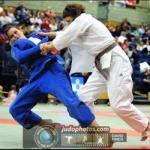
Young athletes are often forced to over compete at a young age and asked to specialise in their sport before they reach adolescence.
Parents find it difficult to say no the various requests from schools, clubs and regions that all want their child to compete. Parents want the best for their child, but are often overwhelmed with too much pressure from conflicting sources.
That’s why I wrote my book “Training young athletes”.
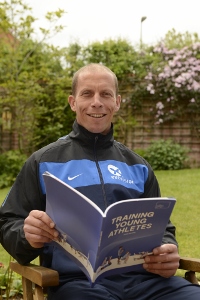 Teachers and Coaches know the theory of Long Term Athlete Development (LTAD), but are pressurised for time and may not know how to train the individual components that comprise sporting performance.
Excelsior offers support to teachers and parents with solid programmes aimed at developing the young athlete at the right time FOR THEM.
Children’s fitness is different from adults. They can’t get fit for sport playing the Wii and are at risk of injury if adult programmes are imposed upon them.

More information can be found in our FREE resource pack.
Athlete Development Should be Child Centered
Your child may have been identified as “Talented” and have been asked to attend Regional or even National training events. This often happens too early and benefits the Governing Body rather than the child.
There is no rush, your child will not “Miss Out” if they are under 16, and probably under 18. As long as they have a varied and happy approach to developing their athletic ability. FUN is important.
Athletic Development Club
Designed for young athletes who are playing more than one sport, the Club runs workshops and weekly training sessions. The workshops are designed to educate athletes, parents and coaches and run 6 times a year. They will include:
- Physical Competency Assessment – to help prevent injuries BEFORE they happen
- Planning advice – from a neutral perspective to help parents plan the month and year of their child’s development.
- Physical training programmes that are YOUTH specific i.e. “simple to complex”, “slow to fast”, “static to dynamic”, “unloaded to loaded”.
- Coach and Teacher workshops to help you transform theory into practice
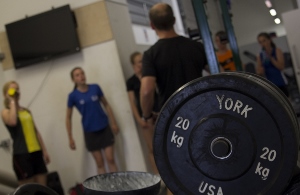
Strength training is part of LTAD
Athletes can then attend our weekly training sessions in Willand or Wellington.
It is important to understand that the process is Long Term, and that Athletic Development requires a multi faceted approach utilising many different types of activities.
 “I have worked with James since I was 13 years old and he helped me mature from a lanky teenager with no co-ordination to what I am today.
His consistency and variation of training as well as the amount of time and effort he put into me helped me make regional teams as well as having a top 8 basketball team in the country at aged 14.
His structured training has vastly improved every aspect of me as an athlete: speed, agility, flexibility and co-ordination have all improved massively. Even though I may not be able to see him as much due to a busy college/ life timetable I use many of his training programmes and follow his podcasts closely.
I’ve grown up with many different coaches but the most important coach that I attribute my success and developments to is James.”
Dom Hinchcliffe, basketball player and A level student.
Don’t wait until it is too late, contact us for a free initial consultation and help your child achieve a happy, healthy and successful sporting experience.
by James Marshall
13 Comments
Leave a Comment
You must be logged in to post a comment.
[…] Read more on LTAD here: Training Young Athletes […]
[…] you wish to have an easy to follow guide to training young athletes, then click on the book cover to the right. I wrote this standing on the shoulders of […]
[…] this Olympic Year, I thought it would be a good idea to hear from coaches who have worked with developing athletes and their thoughts. Today Marco Cardinale who is the head of Sports Science and Resarch […]
[…] Help on planning your child’s training here […]
[…] Young Athlete […]
[…] is a critical part of athletic development,and slow training – if overdone – will certainly not enhance quickness, agility, and […]
[…] Training the young athlete […]
[…] am starting this Olympic year with a focus on training young athletes. With all the hoo ha about the top end, it is important to remember how to get there. This week […]
[…] a very cold day with a biting East wind, young athletes from around Devon and Somerset came to the second Athlete Support Day hosted at Exeter […]
[…] aim to implement these ideas during the Athletic Development Training in Gloucester over the coming weeks in order to progress my […]
[…] young athletes are often competing in matches and tournaments, the goal should always be long term progression and […]
[…] fellow coaches to try and educate the next generation of athletes and future coaches through the Athletic Development Centre. I hope that you can be part of […]
[…] reading about fitness programmes for young people, the outcome is often emphasised. Especially when dealing with “academies” or National […]