
Strength and Power in Rugby: part 2
What about the Ruck and Maul?
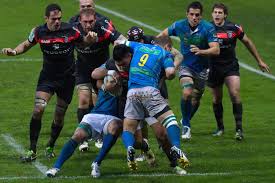 The ruck is specific to rugby union and is where the tackled player is off his feet and tackled to ground. The average ruck lasts in the region of 4 or 5 seconds and therefore the primary physical determinant for success is power. There are over 100 rucks and mauls per game and the ability to maintain the effectiveness in the ruck for the full length of the game is also dependent upon strength endurance and cardiovascular endurance.
A maul is created when the tackled player remains on his feet and players from either team enter the maul to secure the ball and/or gain territory. The maul lasts between 8 and 20 seconds (and sometimes longer) and therefore strength and power endurance come into play, particularly in the muscle groups used to grapple. There are approximately four rucks or mauls per minute of possession. The number of rucks and mauls entered per game by players of different positions varies.
The Set Piece
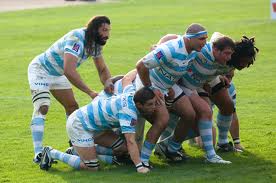 The scrum is common to both rugby league and rugby union but the laws and interpretations of them have diverged so much that there is very little resemblance between the two.
The scrum in rugby league has been effectively de-powered and very rarely is a push seen whereas the scrum in rugby union is a highly skilful sub set of the game requiring extremely good technique and a high degree of explosive and static strength.
The scrum in rugby union now involves two packs of approximately 900kg hitting each other from approximately 1m apart. Good individual and group technique will concentrate this force in one direction through quite a narrow point, and at the centre of this is the hooker (Scrum coaches please do not ring up to say I am not an expert- I know, I am painting a general picture!!). In order to withstand these forces the hooker needs to be strong, and able to absorb large forces through his spine.
Rugby union is a late specialisation sport, yet young players are often pigeon holed into positions at any early age. Approximately three quarters of hookers in today’s premiership did not start in that position;therefore they have not had the muscular adaptation over a period of time to develop their bodies for that position. It could be argued that the game’s administrators should look at ways of ensuring that all younger players scrummage.
The line out is peculiar to rugby union and involves jumping and lifting both which require technical skill aligned with strength and power. At top level this will mean a 120kg player being propelled upwards by two powerful 110kg players to a height (feet off the ground) of approximately 1.75m before catching and passing a ball and then landing on the ground again.
Think “forces”, and then ponder the necessary long-term physical and technical preparation required to succeed and stay injury free.
Part 3 appears tomorrow
I definitely agree that differences in strength and power are the biggest discriminators between teams. Having played many times against Premiership Academy sides as a junior, the effort needed to drive stronger players backward in contact was definitely the most energy sapping part of the game!
I think the point about needing to transfer strength and power from the gym to the field is one that all young rugby players need to remember. Too many players in the modern game seem focussed on 1RM’s and forget the skills they need the strength for in the first place.
Whole heartedly agree. I find the difference between elite and amateur is less about strength (in fact some amateur 1RM benches I’ve seen match that if strongmen!) and more about game awareness and ball handling – especially in the latter stages of the game