
How to manage “Growing pains”
A guide to common growing pains in athletes
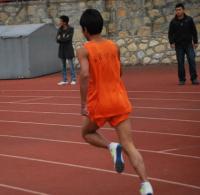 Children and adolescents endure many of the same injuries and mechanical dysfunctions as adults. However, in the maturing skeleton there are some specific conditions that are only seen in the young.
Here is an overview of the common conditions, their causes and how to manage them.
Osgood -Schlatters, Sinding-Larsen-Johansson and Severs lesions
These are non-articular types of osteochondrosis or ‘traction apophysitis’. These specific conditions affect the growth plates, where muscle tendons attach to bone.
They are normally seen in the more active and sporty adolescents during or after a growth spurt. Either one or both limbs can be affected. All three of these conditions are self- limiting and in some cases the symptoms can continue for years.
Recovery rates will vary between each child. Investigations such as x-ray and diagnostic ultrasound are not normally indicated to make a diagnosis.
- Osgood-Schlatters
A common cause of anterior knee pain in the young athlete. Pain, swelling and local tenderness will be present at the tibial tuberosity, where the patella tendon attaches below the knee joint. In some cases a boney lump can be seen. Affects boys more than girls.
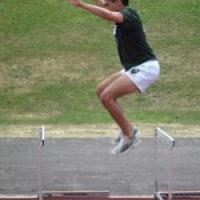 Sinding-Larsen-Johansson
A less common cause of anterior knee pain in the young athlete. Pain, swelling and local tenderness will be present at the inferior pole of the patella, at the superior end of the patella tendon (at the bottom of the knee cap).
- Severs
A common cause of heel pain in young athletes. Pain, swelling and local tenderness will be present where the Achilles tendon attaches onto the heel.
What are the causes of Growing Pains?
- Growth spurt (during this period bone will lengthen before muscle. This will put increased pressure on tendon attachment during exercise) Increased intensity of training
- Adaptation to a new sport, especially those which involve running and jumping.
- Reduced muscle length, especially during or after a growth spurt.
- Reduced muscle strength.
- Poor control / stability at the spine and pelvis.
- Poor foot mechanics.
How to manage the condition
 Monitor and keep a record of the child’s growth. This can help to adapt training needs specifically .e.g. during a growth spurt an increased emphasis on stretching is required and maybe some reduced activity.
- Reassurance to the child that his/her condition is relatively short term and that by continuing with their sport is not doing any harm.
- Activity modification (this should be guided by pain levels. There is no evidence to suggest that prolonged and complete rest is beneficial)
- Regular stretching of the surrounding muscle groups
- Strengthening of the surrounding muscle groups. This should be focused on during periods of reduced symptoms and limited growth.
- Spinal and pelvic stability / control work.
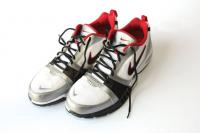
- Assessment of foot mechanics Maybe a need to change footwear or use of orthotics. Small heel raises or gel cushions can be useful to control the symptoms of severs.
- Use of ice locally
- Use of massage to surrounding muscles
- Seek medical advice regarding use of analgesics and anti-inflammatories.
Summary
Growing Pains could be considered a normal part of growing up. A sound training plan and recognition of sudden changes in growth can help guide the young athlete through the problem.
Any young athlete who is complaining of pain needs to be assessed by a medical professional. You can book in at my Physiotherapy clinic in Willand, Cullompton, Devon.
References
- ‘A heel cup improves the function of the heel pad in Severs injury : effects on heel pad thickness, peak pressure and pain.’ Perhamre et al. Scandinavian Journal of Medicine and Science. August 2012.vol 22.4.p516.
- ‘Childhood lower-limb apophyseal syndromes : “what is the egg on my leg?.”’ Stickland. SportEX Medicine. Jan 2011.47.p22.
- ‘Adolescent anterior knee pain’ Gerbino et al.Operative techniques in Sports Medicine. July 2006.vol 14.3.p203.
- Clinical Sports Medicine. Bruckner et Al. Third edition 2006.Mcgraw-Hill Australia Pty Ltd.
Sarah Marshall Chartered Physiotherapist.
Fantastic, thanks, will print out and give to parents whose children have any of these x
Deb Saunders – Weston Aerobic Gymnastics
Thanks Deb, glad it was of use.
Has anyone used the Strickland protocol for treatment of Osgood’s and found positive results? Makes sense to loosen tight quads before stretching to decrease tension on tibial tuberosity …
Thoughts welcome
Hannah
Hi Hannah
I am not familiar with the specific Strickland protocol or have any peers who have used it.It is misleading to claim a protocol can ‘cure’ a condition such as Osgood Schlatters. I also think this raises unrealistic expectations for the young athletes future teenage years in sport as they continue to grow.It is highly likely that they will experience further episodes of pain.
Every case should be assessed individually.It is important that the parent, coach and Physio involved work together with the young athlete.Symptoms should be closely monitored and activity levels adapted accordingly on a daily/weekly basis. Only in extreme cases would I advise complete rest for a short period of time.
Physiotherapy treatment must patient specific.However,I have found good results clinically with hamstring stretching initially as this will reduce the tension at the tibial tuberosity .Try and make things functional and fun.Focus on strength and conditioning work is more suited during symptom remission, although integral through out, especially if the athlete is not able to play sport.The athlete must continue to feel ‘involved’.
Hope this helps
Sarah
Sarah Marshall
Physiotherapist
Physio Excelsior
Thanks Sarah I agree with all your points completely and do this with my players as each individual is different. I am just interested to find someone other than Jenny Strickland herself that has used the protocol and found it to actually work. I myself am dubious about it therefore the reason for my question.
Thanks for the hamstring stretching point to reduce anterior translation of the tibia, I shall push this more with my players. They are still a nightmare to encourage stretching within their daily routines! Any pointers on that would also be very much appreciated.
Thanks again
Hannah